 torus.png
Objectives:
The course aims to provide a thorough introduction to the fundamental concepts and structures of topology, which form an essential foundation for advanced study in virtually all areas of mathematics. It focuses on developing a deep understanding of topological spaces, continuity, compactness, connectedness, and convergence, equipping students with the conceptual tools necessary to rigorously approach analysis, geometry, algebraic topology, and other mathematical subjects that rely on topological reasoning.
Recommended Prior Knowledge:
Students are expected to be familiar with:
-
Set-theoretic techniques
-
Elementary analysis on the real line
-
The field of real numbers defined as an Archimedean field containing
Q and satisfying the least upper bound property
-
Real sequences, intervals, and continuous function : f:\mathbb{R}\to\mathbb{R}.
-
Differentiation
-
-
Linear algebra:
-
Vector spaces, bases, linear maps
-
Matrix computations and determinants
-
Bilinear forms and scalar products
-
-
Multivariable functions:
-
Partial derivatives
-
- المعلم: Salah BENMAHMOUD
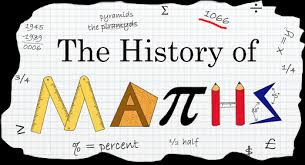
The history of mathematics traces the development of mathematical thought from ancient civilizations to modern times. It explores the origins of fundamental concepts like numbers, geometry, and algebra in cultures such as Babylonian, Egyptian, Greek, and Indian. Significant milestones include the formulation of Euclidean geometry, the development of calculus by Newton and Leibniz, and the rise of abstract algebra and mathematical logic in the 19th and 20th centuries. This journey highlights the interplay between mathematical discoveries and advancements in science, technology, and philosophy, showcasing the universal and evolving nature of mathematics.
- المعلم: Soumia TAYEBI

Numerical Analysis is a foundational field of mathematics and computer science that focuses on developing and analyzing algorithms for solving mathematical problems that are difficult or impossible to solve analytically. This module introduces students to the fundamental numerical techniques used to approximate solutions to nonlinear equations, systems of linear equations, and ordinary differential equations. It also explores methods for interpolation, numerical differentiation, and integration, providing essential tools for scientific computing. Emphasis is placed on the analysis of errors, algorithm efficiency, and the conditions under which numerical methods succeed or fail. The course combines theoretical concepts with practical applications, equipping students with the skills necessary to address real-world problems in engineering, physics, and other quantitative disciplines.
- المعلم: Soumia TAYEBI