- Teacher: KARIMA LARBI
This course is of fundamental importance for scientists. It aims to provide students with essential mathematical formalisms required for the study and understanding of physics and chemistry. Through this course, students acquire the basic analytical tools necessary to model physical phenomena, analyze experimental results, and develop rigorous scientific reasoning.
Recommended Prerequisites
A solid background in mathematics at the secondary education level is strongly recommended, including basic algebra, geometry, and elementary calculus.
Course Content
Chapter 1: Vector Analysis
This chapter introduces the fundamental concepts of vector mathematics, which are widely used in physics and engineering.
-
Vector spaces, bases, and finite dimensions
-
Vector operations (addition, scalar multiplication, dot and cross products)
-
Projection of vectors onto axes in a Cartesian coordinate system
-
Vectors in polar coordinates
-
Vectors in cylindrical coordinate systems
Chapter 2: Differentiability
This chapter focuses on differential calculus and its applications.
-
Definition of the derivative, right-hand derivative, and left-hand derivative
-
Differentiable functions on an interval, differential concept, and geometric interpretation
-
Derivative rules: derivatives of composite functions and inverse functions
-
Higher-order derivatives
-
Rolle’s theorem, Mean Value Theorem, and L’Hôpital’s rule
-
Taylor series and Maclaurin series
Chapter 3: Primitives and Integrals
This chapter develops the concepts of integral calculus and their practical applications.
-
Primitive functions and basic integration techniques
-
Integration by parts and change of variables
-
Integration of rational functions
-
Simple integrals and double integrals
-
Table of common primitive functions
- Teacher: AMINA ARRAR
- Teacher: SABRINA BOURKI
L’enseignement de cette matière permet à l’étudiant d’acquérir les notions fondamentales de la
mécanique classique liée au point matériel à travers la cinématique, la dynamique et les concepts
travail et énergie.
In This year, we learn physics in English
- Teacher: Ihsene yasser TALEB
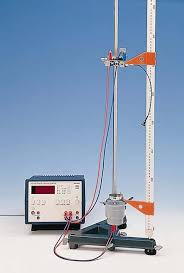
Consolidation of the theoretical knowledge acquired in the Point Mechanics (Physics I) course through the application of error analysis.
Learning and visualization of phenomena related to classical mechanics.
- Teacher: AMEL SLAMANI