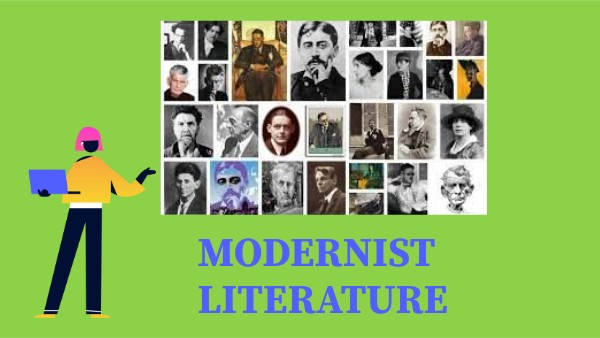
Literary modernism course is intended for L3 students to enable them to analyse modernist literary texts.
- Teacher: HAFIDA MESKINI
Essay Writing lessons are an annual course designed for third year license
students of English wanting to realize more of their potential; moreover, other learners can
use it to learn about essay writing skills on any subject in any discipline. Most importantly, it
is intended to novice teachers of Written Expression as well to assist them having a review of
the basics for producing an academic essay. This course is to be delivered approximately over
a period of fourteen weeks for each semester with an average of two sessions per week; that
is, a total of forty sessions, each lasts ninety minutes. This course is presented in a consecutive manner, from how to write an introduction to how to compose a full essay with different expository types.
- Teacher: Sarah KHETTIB
- Teacher: Asma BOUZOUINA
Introducing definition and characteristic features of Literary Modernism.
- Teacher: HAFIDA MESKINI
Research Methodology
This module introduces students to the fundamental principles, approaches, and practices of academic research in the field of language studies and education. It guides learners through the essential stages of the research process—from identifying a research problem to collecting, analyzing, and interpreting data. Students will engage with both quantitative and qualitative research traditions, compare their procedures, and develop the skills necessary to design and conduct methodologically sound studies.
Throughout the module, students will learn how to formulate research questions, review and synthesize relevant literature, select appropriate research tools, and apply ethical standards in academic inquiry. Emphasis is placed on critical thinking, clarity in argumentation, and the development of practical skills such as summarizing, paraphrasing, referencing, and reporting findings.
- Teacher: Asma BOUZOUINA


The Translation module introduces students to the theory and practice of translating texts between English and another language (often Arabic or French, depending on the university).
It aims to develop students’ linguistic, cultural, analytical, and communicative skills so they can understand and reproduce meaning accurately in another language.
Key Objectives of the Module
By the end of the module, students should be able to:
✔ Linguistic Competence
-
Understand and interpret complex texts written in English.
-
Identify grammatical, lexical, and stylistic features that influence meaning.
-
Choose appropriate vocabulary and structures when translating.
✔ Translation Skills
-
Apply translation strategies such as:
-
Literal vs. free translation
-
Modulation
-
Transposition
-
Equivalence
-
Adaptation
-
-
Produce natural, coherent, and accurate translations.
✔ Cultural Competence
-
Recognize cultural references, idioms, proverbs, and context-dependent expressions.
-
Transfer cultural meaning safely and respectfully to the target audience.
✔ Critical Thinking
-
Analyse a text before translating: purpose, audience, tone, register.
-
Justify translation choices.
-
Compare different translation solutions.
3. Topics Typically Covered in This Module
1) Introduction to Translation Studies
-
Definitions of translation
-
Types of translation (literal, literary, pragmatic, technical)
-
Differences between translation, interpretation, paraphrasing
2) Text Analysis Before Translation
-
Identifying text genre (narrative, argumentative, informative)
-
Understanding author intention and audience
3) Translation Techniques & Strategies
-
Borrowing, calque
-
Transposition, modulation
-
Equivalence, adaptation
-
Compensation
4) Common Translation Problems
-
Idioms and figurative language
-
Culture-bound expressions
-
Ambiguity
-
False friends
- Teacher: YAMINA HAMDANI
- Teacher: Benchaa LAKEHAL
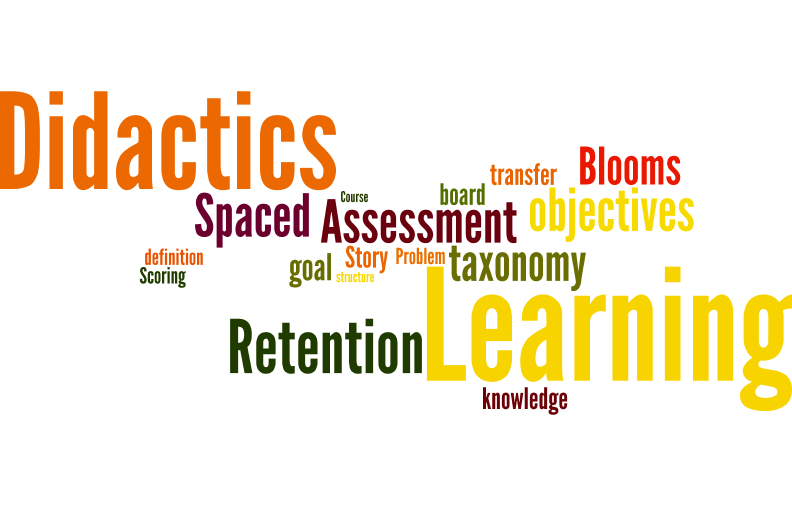
The Didactics module focuses on the importance of teaching methods in improving student learning and engagement. Students will learn various instructional strategies, advanced pedagogical techniques, and effective classroom management. Emphasis will also be placed on ethical standards in education, assessment methods, and their impact on learning outcomes. Students will gain skills in interactive techniques, such as collaborative and problem-based learning, to create inclusive, dynamic environments that support academic integrity and student success.
- Teacher: Abdelkader CHETOUANE