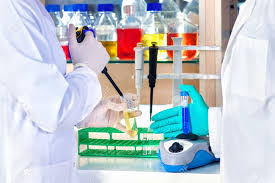
Le module Techniques d’analyse biologiques, destiné aux étudiants de L3 Biochimie, présente les principales méthodes utilisées pour l’étude et l’analyse des molécules biologiques telles que les protéines, les glucides, les lipides et les acides nucléiques.
Il permet aux étudiants d’acquérir des connaissances théoriques et pratiques sur les techniques de séparation, d’identification, de purification et de dosage des biomolécules, notamment la chromatographie, l’électrophorèse, la spectrophotométrie et la centrifugation.
Ce module vise à développer les compétences nécessaires pour réaliser, interpréter et exploiter des analyses biologiques en laboratoire, dans les domaines de la biochimie, de la biologie moléculaire, de la biotechnologie et des sciences biomédicales.
- المعلم: Khayra SBAHI
This course, "Pharmacology & Toxicology", is a Fundamental Teaching Unit designed for third-year Bachelor's students majoring in Biochemistry. The module aims to provide students with the essential principles necessary to understand the mechanisms of action, therapeutic effects, and toxicological aspects of drugs. It also introduces fundamental concepts in drug classification, pharmacokinetics, pharmacodynamics, and the evaluation of drug safety. By the end of this course, students will have a solid foundation to analyze how drugs interact with biological systems and how toxic substances can affect human health.
- المعلم: Leila KEBAL

La recherche documentaire est une étape incontournable de toute démarche scientifique, car elle permet de situer un travail dans le contexte des connaissances existantes et d’en assurer la crédibilité. Le cours « Recherche Bibliographique et Mini Projet » initie les étudiants aux méthodes de repérage, de sélection et d’exploitation des sources fiables, tout en les sensibilisant aux normes de citation et à l’éthique académique. La mise en pratique à travers un mini projet offre l’occasion de transformer ces acquis en expérience concrète pour explorer une problématique, organiser les références et présenter un travail structuré. Ce double volet vise à développer l’autonomie, l’esprit critique et la rigueur scientifique. Ce cours constitue ainsi une étape essentielle dans la formation universitaire, préparant les étudiants à produire des travaux crédibles, méthodiques et porteurs de valeur académique.
- المعلم: EL HADJ ELANDALOUSSI
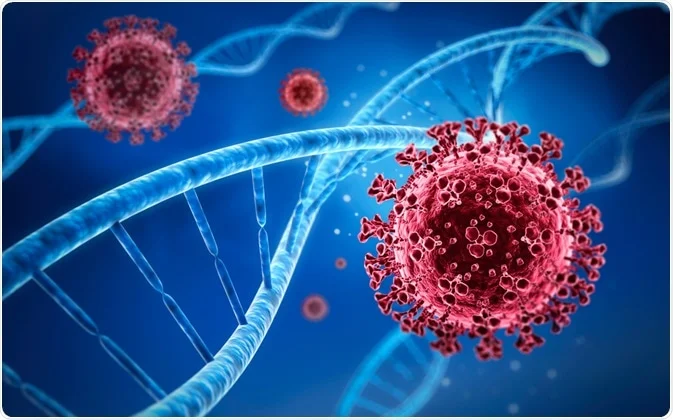
This course provides a comprehensive introduction to molecular biology, focusing on the structure, transmission, expression, and regulation of genetic information. It aims to give students a solid theoretical and methodological foundation to understand how genetic information is stored, maintained, expressed, and modified at the molecular level.
The course begins with an in-depth study of DNA as the molecular support of genetic information, including its structure, physicochemical properties, alternative conformations, and biological implications. Particular emphasis is placed on the organization of prokaryotic and eukaryotic genomes and their functional significance.
Students will then explore genetic mutations and mutagenesis, covering natural and induced mutations, their mechanisms, biological consequences, and their role in evolution, disease, and genetic variability. Methods for genotypic diagnosis and mutation detection are also introduced.
The course further addresses the transmission and conservation of genetic information, with detailed analysis of DNA replication, regulation of replication, and DNA repair mechanisms. Restriction–modification systems and restriction mapping are presented as fundamental tools in molecular genetics and biotechnology.
- المعلم: Abdelkrim AROUSSI