Numerical methods are techniques used to solve complex mathematical problems. They become necessary when analytical solutions are either impossible or difficult to implement. Upon completion of this course, students will be able to apply these methods to solve various mathematical problems, such as nonlinear equations, interpolation, integration, ordinary differential equations, and systems of linear equations. In addition, they will be able to evaluate errors and understand their impact on the accuracy of numerical solutions.
- Enseignant: Karima BEZZINE
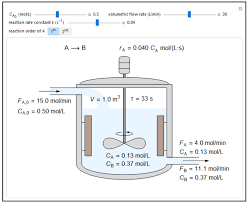
- Enseignant: Khedidja BOUDADI
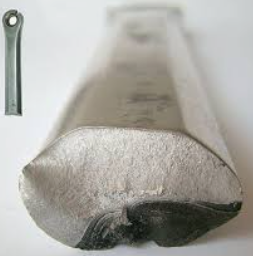
L’objectif du cours de mécanique de la rupture est de procurer des méthodes de calcul et d’analyse permettant l’optimisation de la conception et le design des structures en prenant en considération les concepts : suivi, fiabilité et économique. Elle offre également un contrôle rigoureux des structures sensibles aux agressions imprévisibles des fissures.
- Enseignant: Siham KERROUZ

La maintenance industrielle est un domaine essentiel dans le fonctionnement et la performance des systèmes industriels. Elle regroupe l’ensemble des activités techniques, administratives et de gestion destinées à maintenir ou rétablir un équipement dans un état lui permettant d’assurer une fonction requise.
- Enseignant: Leila BELKADDOUR

- Enseignant: Mostefa RAHLI
- Enseignant: Hafidha RERIBALLAH
- Enseignant: NOREDDINE BENAIRED
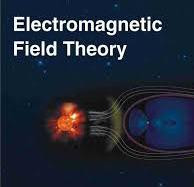
This course material is primarily intended for third-year ENG students in electrical engineering studying the "Field Theory" module. Its purpose is to provide a study guide that helps students familiarize themselves with the use of mathematical tools such as curl, divergence, gradient, etc., for calculating various electromagnetic quantities. It also aims to introduce basic concepts related to the electric field, magnetic field, and different aspects of electromagnetism, while offering a solid understanding of Maxwell's equations to use them effectively in calculations involving the propagation of electromagnetic waves. To aid in better understanding, the course includes solved examples.
- Enseignant: NOREDDINE BENAIRED
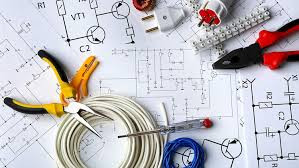
Designed to facilitate understanding, learning, and revision, this material provides a straightforward course to support third-year electrical engineering “electrotechnics” students, up to the exam. This course material brings together essential knowledge by addressing the operation, structure, technology, and implementation of electrical equipment used in electrical networks (transport, distribution, etc.).
In its first part, it enables students to understand the structure of electrical devices used in electrical networks, such as circuit breakers, switches, disconnectors, and contactors, as well as to make choices and size electrical equipment appropriately.
The second part of this material will allow learners to read electrical schematics, distinguish between their representations, and understand the identification and significance of markings on electrical schematics.
- Enseignant: NOREDDINE BENAIRED

Ce cours présente les principes fondamentaux permettant de structurer, planifier et optimiser les activités de maintenance au sein d’une entreprise. Il aborde les différents types de maintenance, la gestion des ressources, la planification des interventions, l’analyse des pannes et l’amélioration continue. L’objectif est de donner à l’étudiant les compétences nécessaires pour organiser efficacement un service de maintenance, réduire les arrêts de production, améliorer la fiabilité des équipements et mettre en place des méthodes modernes telles que la maintenance préventive, conditionnelle et la GMAO.
- Enseignant: SEIF EDDINE BENDAOUDI