This module is designed to develop students’ proficiency in Scientific English with a specific focus on the field of Parasitology. It aims to strengthen students’ ability to understand, use, and communicate scientific information effectively in English, which is essential for academic studies, research, and professional careers in biological sciences.
- Teacher: Leila KEBAL
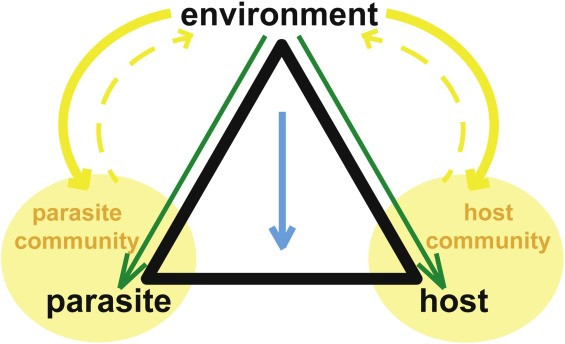
This course provides a fundamental overview of general parasitology, focusing on the diversity, biology, and medical importance of parasites affecting humans and animals. It introduces the main groups of parasites, including protozoa, helminths, and arthropods, and examines their life cycles, transmission routes, and epidemiological significance.
The course also explores host–parasite interactions, basic principles of parasitic immunology, and the mechanisms underlying parasite pathogenicity. In addition, it addresses emerging and re-emerging parasitic infections, highlighting the impact of environmental changes, globalization, and human behavior on the distribution and control of parasitic diseases.
Designed for students in biological and health sciences, this course aims to provide essential knowledge for understanding parasitic diseases and their importance in public health, research, and disease prevention.
- Teacher: Abdelkrim AROUSSI

La biologie moléculaire est une discipline fondamentale pour comprendre les mécanismes qui gouvernent la vie au niveau moléculaire. Elle offre des outils indispensables pour explorer, manipuler et analyser le matériel génétique.
- Teacher: Sarah MELLALI
Bioinformatics is revolutionizing parasitology by using computational tools to analyze vast amounts of genetic and molecular data from parasites and their hosts. This allows researchers to understand parasite evolution, host interactions, and virulence, leading to new methods for diagnosis, treatment, and control of parasitic diseases. Key applications include comparative genomics, transcriptomics, and proteomics to identify potential drug targets, study drug resistance, and gain insights into parasite life cycles and disease mechanisms.
- Teacher: Dr. Sid Ahmed AOUADJ
Bioinformatics for parasitologyuses computational tools to analyze microbial data, including genomes, for applications in medicine, agriculture, and environmental science. It involves techniques like sequence analysis and annotation to identify microbial genes, predict their functions, and understand evolutionary relationships. Key areas include comparative genomics, which compares genomes, and metagenomics, which analyzes microbial communities, to understand microbial diversity, disease mechanisms, and resistance to antimicrobials.
- Teacher: Dr. Sid Ahmed AOUADJ