- Teacher: Ibrahim BERKANE

L'objectif de ce cours de Physique 2 du 2eme semestre pour les étudiants d'agronomie et d'acquérir des notions supplémentaires de physique nécessaire et utile Dans leur cursus d'ingénieur en agronomie.
- Teacher: ALI ARAF

Le présent cours Vise à initier les étudiants de première année ingénieure agronome Aux notions fondamentales De bureautique De Microsoft tels Excel et PowerPoint essentiel Pour la maîtrise des calculs et la maîtrise des présentations.
- Teacher: ALI ARAF
The Scientific English course is designed to develop students’ ability to understand and use English in agricultural and scientific contexts. It focuses on essential vocabulary, reading comprehension, and basic communication skills related to agronomy, plant science, soil science, and agricultural technology.
Students learn common scientific terms, definitions, and expressions used in agriculture. The course also trains them to read scientific texts, identify key information, and understand graphs, tables, and short research descriptions. Emphasis is placed on technical vocabulary related to crops, soil, irrigation, fertilizers, climate, and farm management.
In addition, students practice writing simple scientific sentences, short descriptions, and basic reports. Oral communication skills are also introduced through presentations, pronunciation practice, and classroom discussions.
The objective of the course is to enable first-year agricultural engineering students to understand scientific documents in English and use basic technical language in their academic studies.
- Teacher: Mustapha TEFFAHI
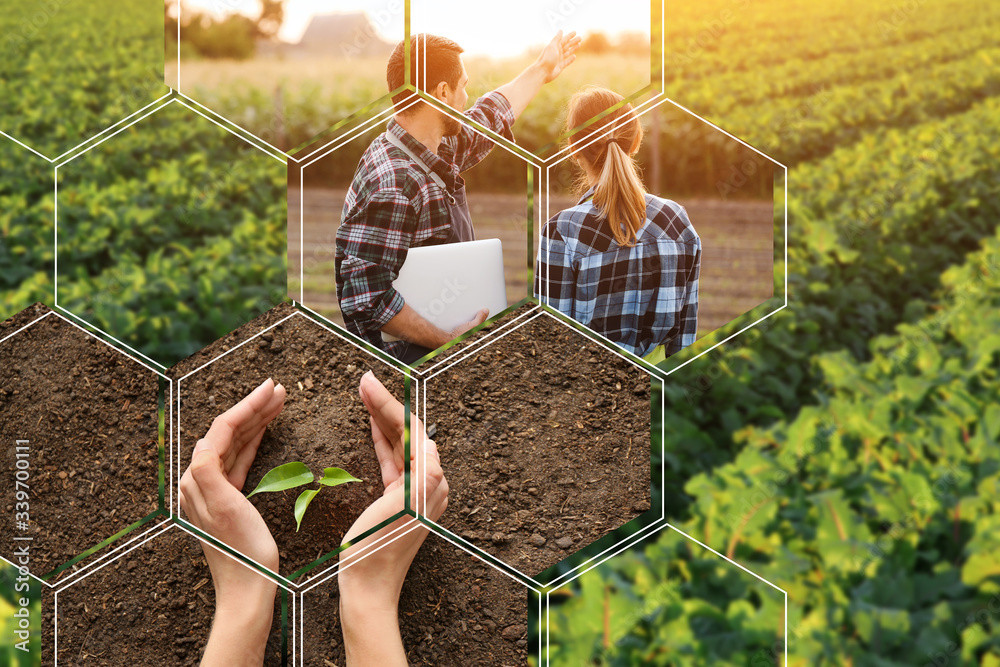
Applied Agriculture is the practical application of agricultural science to improve crop production, soil management, and farm efficiency. It combines theoretical knowledge with field practices.
1. Objectives of Applied Agriculture
- Improve crop productivity
- Use natural resources efficiently
- Apply modern farming techniques
- Ensure sustainable agriculture
- Develop practical farming skills
2. Soil Management
Soil is the basic resource in agriculture. Good soil management includes:
- Soil preparation (plowing, harrowing, leveling)
- Soil fertility management
- Organic matter addition (manure, compost)
- Fertilizer application (NPK)
- Irrigation and drainage management
3. Crop Production
Crop production involves several steps:
- Land preparation
- Seed selection
- Sowing methods (broadcasting, drilling, transplanting)
- Irrigation scheduling
- Weed control
- Fertilization
- Pest and disease management
- Harvesting
4. Irrigation Methods
Different irrigation techniques are used:
- Surface irrigation
- Sprinkler irrigation
- Drip irrigation
- Furrow irrigation
Proper irrigation improves yield and saves water.
5. Fertilization
Plants need essential nutrients:
- Nitrogen (N) → vegetative growth
- Phosphorus (P) → root development
- Potassium (K) → plant resistance
Fertilizers can be:
- Organic fertilizers
- Mineral fertilizers
- Biofertilizers
6. Weed Control
Weeds compete with crops for:
- Water
- Nutrients
- Light
Control methods:
- Mechanical control
- Chemical control (herbicides)
- Manual weeding
- Cultural practices
7. Pest and Disease Management
Crop protection includes:
- Preventive measures
- Biological control
- Chemical control
- Integrated pest management (IPM)
8. Harvesting and Post-Harvest
- Harvest at physiological maturity
- Use appropriate tools
- Storage under suitable conditions
- Reduce post-harvest losses
9. Sustainable Agriculture
Applied agriculture promotes:
- Soil conservation
- Water saving
- Crop rotation
- Organic farming
- Environmental protection
- Teacher: Mustapha TEFFAHI
- Teacher: Zakaria MESKINI
Objectifs de l’enseignement :
L’objectif de cette matière est d’inculquer aux étudiants les principes fondamentaux de l’organisation tissulaire des plantes, et leur développement.
- Teacher: Belgacem NOUAR